Streamlining Communication: The Value of Documentation
We've all been there. Sitting in a meeting that could have been an email, a shared document, or even a quick chat. The sheer volume of meetings in modern workplaces is staggering - and the impact on productivity, well-being, and ultimately, the quality of work, is becoming increasingly clear. I've wrestled with this challenge, and I've arrived at a simple, yet powerful, principle: “Either have small sync meetings or documentation.”
This isn't about dismissing the value of communication, but about fundamentally rethinking how we communicate. It's a perspective directly informed by our belief that Train People To Be Autonomous - my goal is to create environments where individuals thrive, not require constant oversight.
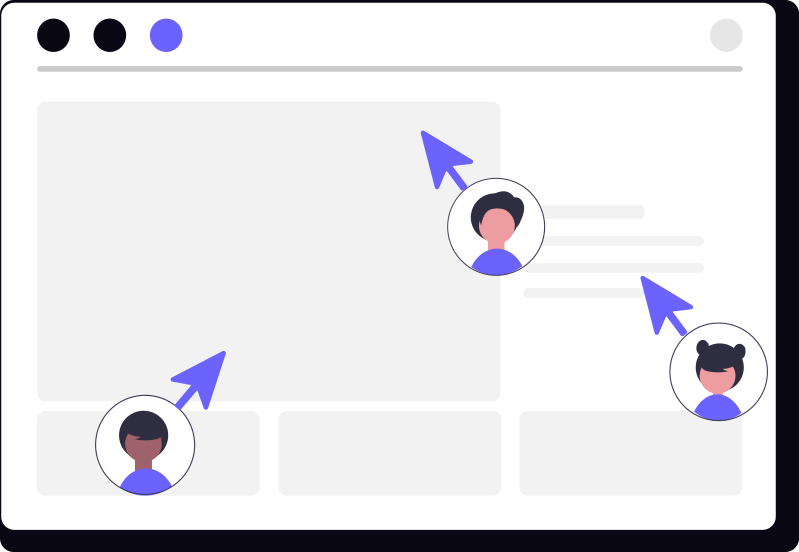
Why Documentation Works
When we build a shared document - a project brief, a design spec, a process outline - it immediately forces a degree of clarity and intentionality. It creates a single source of truth, accessible to everyone involved. This naturally leads to:
- Reduced Meeting Overhead: Instead of lengthy sync meetings to clarify details, teams can collaboratively review and comment on existing documentation.
- Increased Accountability: When expectations are clearly documented, individuals take ownership and responsibility.
- Improved Consistency: Redundancy, as we've championed before, becomes easier to achieve when everyone's working from the same information.
- Empowerment: Individuals are empowered to contribute and ask questions before a meeting, preventing unnecessary discussions.
The Exception: When Sync Meetings Are Necessary
Of course, there are times when a sync meeting is the right approach. These are typically situations where:
- New Information Emerges: A significant, unforeseen development requires immediate discussion.
- Complex Problem-Solving is Needed: When deeply complex issues need to be addressed collaboratively.
- Relationship Building is Crucial: While documentation builds functional understanding, sync meetings can foster stronger team relationships (1 on 1 meetings are an example as I'll discuss in the future).
A Compassionate Approach - and the Shift in Perspective
As we've touched on in From Underperformer to Team Player: A Compassionate Approach, a fundamental shift in thinking about underperformance is often needed. Rather than immediately scheduling a meeting, a quick document or shared tool can provide the context and support necessary for improvement.
Leveraging Collaboration - An Engineering Lens
From an engineering perspective, the principles of effective collaboration - particularly between engineering and business teams - extend to this area. Clear documentation can mitigate misalignment and ensure everyone is aligned on priorities, just as we've seen in our experiences "Effective Collaboration between Engineering and Business Teams: Lessons from the Front Lines."
Now it's your turn. I love to hear your thoughts! Which approach do you find most effective?